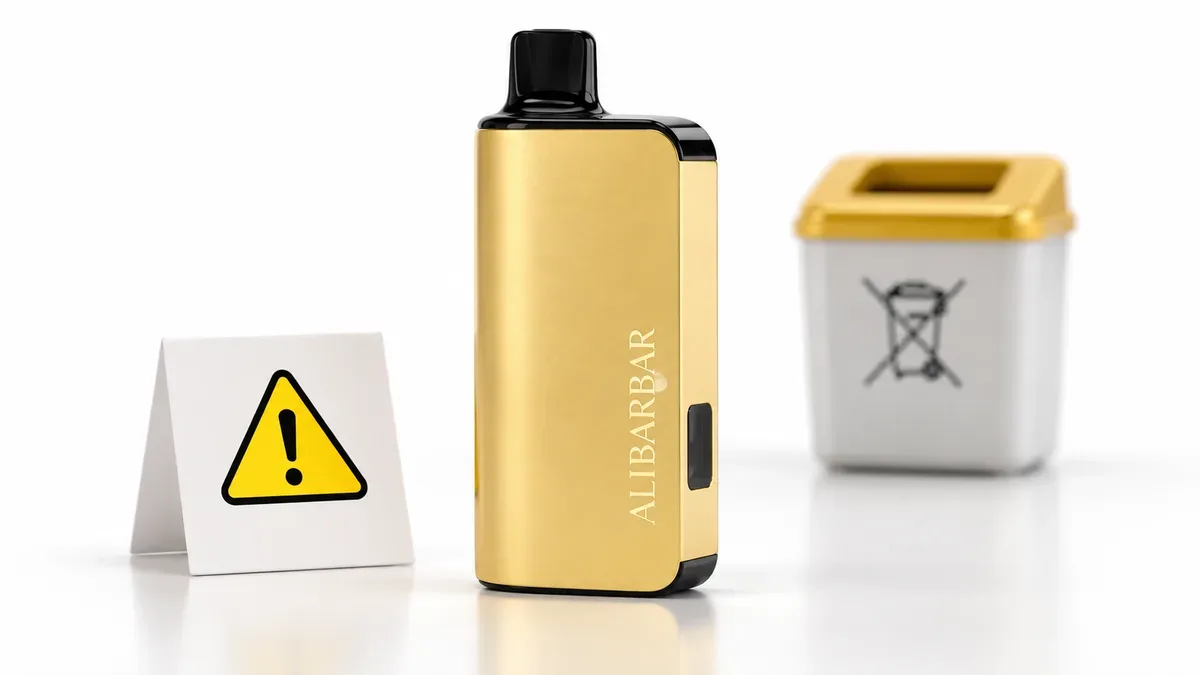
ALIBARBAR INGOT Safety Warnings and Handling Information: Battery and Consumer Safety Guide
Understanding ALIBARBAR INGOT safety warnings involves identifying electrical hazards, preventing accidental nicotine exposure and recognising appropriate waste-management requirements.
This educational guide examines important safety principles associated with compact electronic devices containing lithium-ion batteries and chemical substances.
1. Understanding Product Safety Documentation
Safety instructions may differ between individual product versions.
Relevant documentation can include:
Product identification labels
Batch and serial numbers
Manufacturer instructions
Chemical warnings
Electrical specifications
Disposal markings
Information associated with one model should not automatically be applied to another.
2. Common Electrical and Chemical Hazards
Electronic vaping devices combine electrical components with liquid-containing assemblies.
These components introduce several potential hazards.
| Hazard | Potential Consequence |
|---|---|
| Battery damage | Electrical failure or fire |
| Excessive heat | Thermal instability |
| Moisture exposure | Internal electrical damage |
| Liquid leakage | Accidental chemical exposure |
| Physical crushing | Battery or housing damage |
| Improper disposal | Environmental and fire hazards |
The absence of visible damage does not guarantee internal safety.
3. Storage and Household Safety
Environmental conditions can influence the stability of rechargeable electronic equipment.
Extreme temperatures, moisture and physical pressure may damage internal components.
Products containing potentially harmful substances should remain inaccessible to children and animals.
Secure storage is important even when equipment is no longer operational.
4. Recognising Battery Failure Warning Signs
Battery malfunction may produce several observable symptoms.
These include unusual heating, structural deformation, chemical odours and unexpected electrical behaviour.
A damaged lithium-ion battery should not be opened, punctured or subjected to further charging attempts.
Qualified safety personnel should assess hazardous equipment where necessary.
5. Understanding Thermal Runaway
Thermal runaway is a hazardous process involving uncontrolled temperature increases within a battery.
Internal damage or electrical abnormalities can initiate heat-generating reactions.
These reactions may accelerate and result in smoke, fire or the release of hazardous gases.
Battery protection systems cannot eliminate every possible failure scenario.
6. Charging Specifications and Electrical Compatibility
The external appearance of a charging connector provides limited information about an electronic device.
Electrical compatibility depends on documented voltage requirements, internal circuitry and manufacturer specifications.
A compatible physical connection does not establish that charging is authorised.
Damaged or unidentified battery-powered equipment should not be connected to an electrical supply.
7. Understanding Nicotine Poisoning
Nicotine is an addictive substance capable of causing acute poisoning.
Accidental exposure may involve swallowing liquid, skin absorption or contact with the eyes.
Potential symptoms include nausea, vomiting, dizziness, sweating and abnormal heart rate.
Severe exposure can cause seizures, breathing difficulties or loss of consciousness.
Suspected poisoning requires prompt professional advice.
8. Emergency Response and Poison Prevention
| Situation | Appropriate Response |
|---|---|
| Suspected ingestion | Contact a poison information service immediately |
| Skin exposure | Remove contaminated clothing, wash affected skin and seek advice |
| Eye exposure | Begin rinsing with clean water and seek professional guidance |
| Severe poisoning symptoms | Contact emergency services |
| Suspected pet exposure | Contact a veterinarian promptly |
| Smoke or battery fire | Evacuate the immediate area and contact emergency services |
Do not induce vomiting following suspected chemical ingestion unless specifically instructed by a medical professional.
9. Emergency Assistance in Australia
For suspected poisoning in Australia, contact the Poisons Information Centre on 13 11 26.
For serious symptoms, fires or life-threatening emergencies, call 000.
Healthcare professionals may request information about the exposed person's symptoms, the substance involved and the circumstances of exposure.
10. Responsible Electronic-Waste Disposal
Discarded electronic vaping products may contain batteries, metals, plastics and residual chemical substances.
These materials can create hazards during conventional waste processing.
Appropriate electronic-waste and hazardous-waste collection services should be consulted.
Acceptance policies vary between facilities, particularly for equipment with damaged lithium-ion batteries.
11. Why Damaged Devices Require Special Handling
A swollen, leaking or physically damaged device may present different risks from intact electronic waste.
Damage can compromise internal battery components and chemical containment.
Waste authorities should provide appropriate handling and transportation instructions before damaged equipment is brought to a collection facility.
Active overheating, smoke or fire requires an emergency response rather than routine waste collection.
Frequently Asked Questions
Does a charging port prove that a device is rechargeable?
No. Charging capability must be established through appropriate manufacturer documentation.
Can discarded devices still contain nicotine?
Yes. Residual liquid may remain inside equipment after it stops functioning.
Is battery swelling a serious warning sign?
Yes. Swelling can indicate internal battery deterioration or failure.
Can damaged electronic devices be dismantled at home?
Opening damaged lithium-ion equipment can introduce significant electrical and chemical hazards.
Is nicotine exposure dangerous for children?
Yes. Children are particularly vulnerable to accidental nicotine poisoning.
Can pets experience nicotine poisoning?
Yes. Suspected exposure requires prompt veterinary assessment.
Can a damaged vaping device be placed in household rubbish?
Battery-powered devices require appropriate waste-management arrangements. Damaged equipment may require specialised handling.
Does electrical safety establish that vaping is harmless?
No. Electrical reliability and health effects are separate areas of assessment.
Conclusion
ALIBARBAR INGOT safety warnings highlight the importance of product documentation, electrical hazard awareness, poison prevention and responsible electronic-waste management.
Consumers should avoid unauthorised repairs and seek appropriate professional assistance when equipment becomes damaged or accidental chemical exposure occurs.
Understanding these hazards is important for protecting individuals, households and waste-management workers.
Original Safety Article:
ALIBARBAR INGOT Safety Warnings and Handling Information
Australian Public Health Resource:
https://www.healthdirect.gov.au/
This article provides general consumer safety education. It does not constitute medical advice or a recommendation to use vaping products.


Comments
Post a Comment