Electronic Cigarette Design Evolution: History, Technology and Environmental Challenges
Electronic cigarette design evolution provides an example of how electronics, chemistry, material science and regulatory requirements intersect within consumer product development.
Understanding this history requires examining both technological changes and their limitations.
1. Historical Generations of Electronic Cigarettes
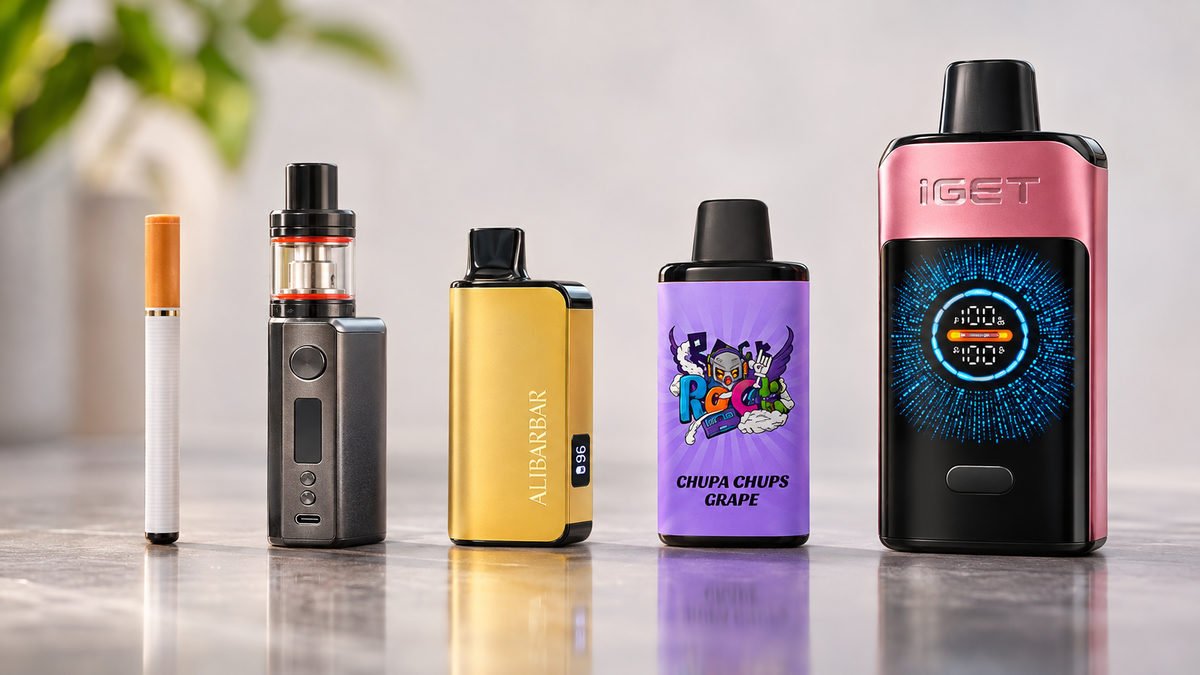
Electronic cigarettes have appeared in several overlapping design categories.
| Generation | Architectural Classification |
|---|---|
| Cigalike | Cigarette-shaped electronic assembly |
| Vape pen | Cylindrical electronic device |
| Box mod | Larger electronic housing |
| Pod system | Cartridge-based architecture |
| Disposable | Integrated, non-serviceable assembly |
These classifications describe general construction rather than health outcomes.
2. Origins of Electronic Cigarette Technology
Early concepts encountered limitations involving component miniaturisation and energy storage.
Developments in electronics subsequently made compact battery-powered heating assemblies technically feasible.
Historical design categories continued to coexist as manufacturers explored different construction methods.
3. Atomizer and Heating Technology
Heating elements convert electrical energy into thermal energy through electrical resistance.
Coil architecture and surrounding materials influence the physical characteristics of a heating assembly.
Evaluating these components requires consideration of temperature, material properties and electrical conditions.
Heating technology alone cannot establish the chemical safety of generated aerosol.
4. Battery Technology and Electrical Engineering
Battery-powered equipment relies on several fundamental electrical measurements.
| Measurement | Unit | Meaning |
|---|---|---|
| Voltage | V | Electrical potential difference |
| Current | A | Rate of charge movement |
| Resistance | Ω | Opposition to electrical current |
| Power | W | Rate of energy transfer |
| Charge capacity | mAh | Electrical charge capacity |
These measurements describe separate properties of an electrical system.
A single specification cannot establish the overall safety or reliability of an electronic product.
5. Electronic Sensors and Control Systems
Sensors convert physical conditions into signals that electronic circuits can process.
Control systems interpret those signals according to predefined operating logic.
The reliability of such systems depends on component quality, software behaviour and environmental conditions.
Electronic monitoring does not eliminate the possibility of component failure.
6. Understanding Product Safety
Electronic product safety involves several independent areas of assessment.
Electrical hazards can include abnormal heating, damaged batteries and unintended electrical connections.
Mechanical hazards may arise from damaged housings or compromised material integrity.
Chemical hazards require separate evaluation of substances and potential exposure.
Evidence supporting electrical reliability should not be interpreted as evidence of chemical or medical safety.
7. Manufacturing Standards and Regulatory Requirements
Regulatory frameworks can influence product specifications and manufacturing documentation.
Requirements may differ between countries and product classifications.
Relevant considerations include:
Manufacturing traceability
Material testing
Electrical safety documentation
Chemical ingredient disclosure
Packaging and warning requirements
A product's commercial availability or appearance does not establish regulatory compliance.
Official requirements should be checked directly with the relevant authorities.
8. Environmental Lifecycle Assessment
Environmental assessment considers the complete lifecycle of a manufactured product.
This includes raw material extraction, manufacturing, distribution, operation and end-of-life treatment.
Examining only one stage may overlook important environmental effects elsewhere in the lifecycle.
Meaningful comparisons require consistent assumptions and supporting evidence.
9. Electronic Waste and Battery Disposal
Discarded electronic cigarettes can present waste-management challenges because of their combination of electrical components and chemical residues.
Lithium-ion batteries require particularly careful handling.
Physical damage during collection or transportation can create fire hazards.
Local waste authorities should be consulted regarding appropriate collection and disposal procedures.
Sealed batteries should not be dismantled by consumers.
10. Evaluating Future Technology
Future product developments should be assessed according to demonstrable outcomes.
Adding electronic functions does not necessarily address existing health or environmental concerns.
Independent research, manufacturing evidence and lifecycle analysis provide more meaningful evaluation frameworks than technological novelty alone.
Frequently Asked Questions
What were the early electronic cigarette designs?
Cigalikes were among the early commercially available formats.
Are electronic cigarette generations strictly chronological?
No. Different architectural categories have continued to coexist.
What does coil resistance mean?
It describes opposition to electrical current through the heating element.
Does advanced battery technology establish health safety?
No. Electrical performance and health effects require separate assessments.
Can electronic protection systems prevent every malfunction?
No. Protective systems address particular failure conditions but cannot guarantee complete reliability.
Does a sophisticated electronic design establish regulatory compliance?
No. Compliance requires appropriate documentation and assessment against applicable legal requirements.
Can electronic cigarettes be discarded with ordinary household waste?
They generally require appropriate battery or electronic-waste collection arrangements. Local requirements should be confirmed.
Does technological evolution make vaping aerosol harmless?
No. Technological sophistication does not eliminate concerns about chemical exposure and nicotine dependence.
Conclusion
Electronic cigarette design history demonstrates how technological developments can introduce both new capabilities and new challenges.
Responsible evaluation requires consideration of electrical reliability, chemical exposure, manufacturing standards and environmental impacts.
Technological innovation should not be confused with demonstrated health safety.
Original Educational Article:
How Electronic Cigarette Design Has Evolved Over Time
Australian Regulatory Resource:
This article provides general educational information and does not constitute medical advice or a recommendation to use vaping products.


Comments
Post a Comment