How Vape Device Firmware Controls Electronic Functions: An Educational Overview
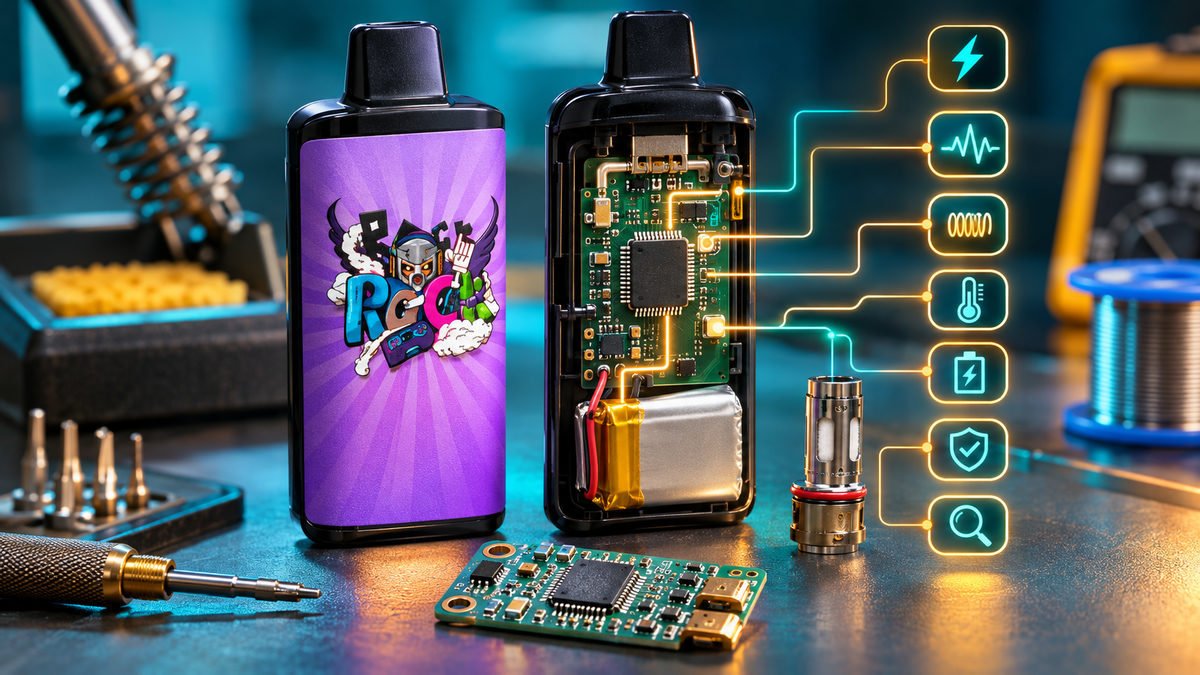
Understanding how vape device firmware controls electronic functions requires examining the relationship between embedded programming, physical components, electrical measurements and safety mechanisms.
Firmware forms part of a broader electronic system whose reliability depends on both software integrity and hardware condition.
1. What Is Firmware?
Firmware is specialised software embedded within electronic equipment.
Unlike general-purpose computer applications, embedded programs are typically developed around a defined hardware architecture.
Their responsibilities may include processing information, coordinating components and communicating system conditions.
2. Firmware, Hardware and Electronic Controllers
Several terms are commonly encountered in embedded-system documentation.
| Term | General Meaning |
|---|---|
| Firmware | Embedded program instructions |
| Hardware | Physical electronic components |
| Microcontroller | Processor designed for embedded tasks |
| Sensor | Component that detects physical conditions |
| Control board | Assembly containing interconnected electronics |
| Feedback | Information returned from a monitored process |
These elements represent different aspects of the same electronic architecture.
3. Understanding Electronic Input Signals
Electronic controllers receive information from physical inputs.
These inputs may represent user interactions, environmental measurements or changes within an electrical circuit.
The accuracy of the resulting information depends on the condition of the relevant components.
Faulty sensors and damaged connections can compromise the reliability of electronic measurements.
4. Embedded Feedback and Electrical Regulation
Feedback systems are designed to monitor the behaviour of a controlled process.
The controller evaluates available measurements against programmed conditions.
This general engineering principle is used in numerous applications, including industrial controllers, charging equipment and portable electronics.
The effectiveness of a feedback system depends on both its programmed logic and measurement reliability.
5. Understanding Temperature Measurements
Electronic systems may use direct measurements or mathematical estimates to evaluate thermal conditions.
An estimated temperature is not equivalent to an independently verified laboratory measurement.
Measurement uncertainty, component deterioration and inaccurate input data can affect the reliability of thermal assessments.
6. Electronic Safety Mechanisms
Protective electronics are intended to address defined electrical or thermal hazards.
| Protection Category | Associated Hazard |
|---|---|
| Short-circuit protection | Unintended electrical connection |
| Overcurrent protection | Excessive electrical current |
| Thermal protection | Abnormal temperature |
| Voltage protection | Electrical conditions outside defined limits |
| Activation timeout | Unintended prolonged operation |
The presence of protective mechanisms does not demonstrate that every possible fault has been addressed.
7. Understanding Electronic Diagnostic Messages
Diagnostic messages communicate information detected by an electronic system.
A warning may indicate an electrical connection problem, an abnormal measurement or an unexpected operating condition.
However, the displayed message may not reveal the underlying physical cause.
Clearing a warning does not establish that the associated fault has been resolved.
8. Firmware Compatibility and Software Integrity
Embedded programs are generally associated with particular hardware configurations.
Differences between circuit designs can affect software compatibility.
Incompatible or modified firmware may introduce unpredictable behaviour and undermine protective functions.
Software obtained from unverified sources can also introduce cybersecurity risks.
9. Recognising Hardware Safety Problems
An electronic malfunction should not automatically be attributed to software.
Battery deterioration, moisture damage, defective sensors and compromised electrical connections can also cause unexpected behaviour.
Warning signs include unusual heating, swelling, leakage, smoke and unexplained activation.
Damaged equipment should not be dismantled, recharged or subjected to unauthorised electrical modifications.
10. Understanding the Limits of Firmware
Firmware cannot physically restore damaged components.
A successful restart does not establish that the underlying hardware is safe.
Similarly, the absence of a warning message does not prove that every component is functioning correctly.
Reliable electronic operation requires sound hardware, accurate measurements and appropriately designed control systems.
11. Health and Safety Considerations
Electrical functionality and health safety are separate subjects.
Even when an electronic cigarette operates according to its programmed instructions, its aerosol may contain harmful substances.
Nicotine is addictive, and devices containing residual liquids and batteries may present additional household and environmental hazards.
Frequently Asked Questions
What is vape device firmware?
It is embedded software that coordinates supported electronic functions within the device.
Is firmware the same as hardware?
No. Firmware consists of programmed instructions, while hardware consists of physical components.
What is the role of a microcontroller?
A microcontroller executes embedded instructions and processes electronic information.
What is an electronic feedback system?
It is a control arrangement that uses measurements to evaluate the behaviour of a monitored process.
Can firmware guarantee battery safety?
No. Software-based protections cannot eliminate every electrical or physical hazard.
Does an error message identify the exact cause of a malfunction?
Not necessarily. Diagnostic information describes detected conditions rather than conclusively identifying their origin.
Can unauthorised firmware introduce safety risks?
Yes. Modified or incompatible software may interfere with established protective functions.
Does successful electronic operation establish health safety?
No. Electrical operation and the health effects of aerosol exposure require separate assessments.
Conclusion
Firmware is an important element of embedded electronic architecture.
Understanding its relationship with hardware, sensors, feedback systems and protective mechanisms provides useful insight into electronic engineering.
However, software cannot eliminate physical hazards associated with defective components, damaged batteries or chemical exposure.
Accurate technical documentation and awareness of system limitations remain important aspects of consumer safety education.
Original Educational Article:
https://vapeswarehouseaus.com/how-vape-device-firmware-controls-electronic-functions/
This article provides general educational information and does not constitute medical advice or a recommendation to use vaping products.


Comments
Post a Comment